
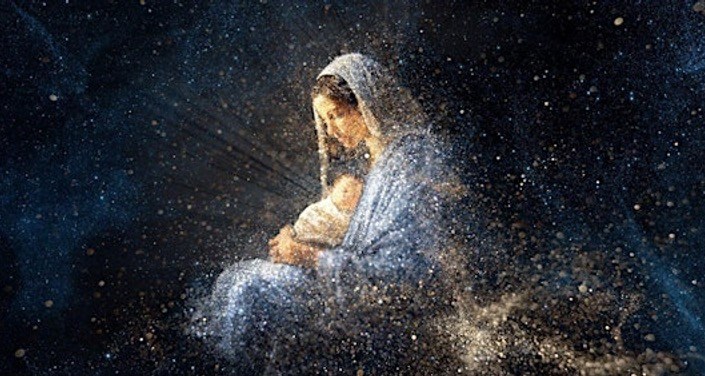
For a Child has been born for us, a Son given to us; authority rests upon his shoulders; and he is named Wonderful Counselor, Mighty God, Everlasting Father, Prince of Peace. (Isaiah 9:6)
We have officially closed the Christmas Season and January 6th marks the beginning of Epiphany. This Season (which lasts from now until Ash Wednesday) is a journey through the unfolding revelation of the Incarnation. Each moment of revelation speaks to who Jesus is and what he has done for us. During Epiphany, we reflect on 1) the manifestation of God’s Love in the birth of Christ, 2) the invitation to the Gentile Magi to come and worship the Jewish King, 3) the proclamation that Jesus is God’s Only Son, the beloved and Holy One at his baptism, 4) the prophetic witness to his divine mission through Simeon and Anna at his presentation in the Temple, and 5) arrive at the unveiling of Jesus’ divinity through the Transfiguration.
At Christmas, we proclaim that the “Prince of Peace” has come; during Epiphany, we ponder what that really means.

So, what does it mean? What are we actually saying when we declare that Jesus is “Prince of Peace,” that his birth heralds “Peace on earth, and good will toward all people?”
Unfortunately, our language has become so narrow, our vernacular so reductive, that our words lack power and fail to evoke the imagination in any meaningful way. When we say “peace,” what we tend to mean is something like a cessation in hostility, a cease fire, a temporary lull in some conflict. If that’s all “peace” amounts to then Jesus has come for nothing more than to call a time out in the ongoing boxing match of human drama. If that is the limit of our scriptural imagination then it is no wonder modern Christians have been able to reduce the Gospel, the cosmic Good News of God’s power and saving grace, to nothing more than another social movement.

And the peace of God, which surpasses all understanding, will guard your hearts and your minds in Christ Jesus. (Philippians 4:7 ESV)
But, thanks be to God, the biblical definition of peace is so much more! Both the Hebrew shálōm (שׁלום) and the Greek eírēnē (εἰρήνη) convey far more than the absence of war. They both signify wholeness and completeness, well-being and health, prosperity and safety, inner and outer tranquility, perfect accord and harmony. Eirene is what Paul meant when told the Church at Thessalonica that God’s peace would always reign in every way (2 Thes 3:16). It’s what Jesus meant when he said, “Peace I leave with you; my peace I give you. I do not give to you as the world gives; do not let your hearts be troubled and do not be afraid!” (John 14:27)
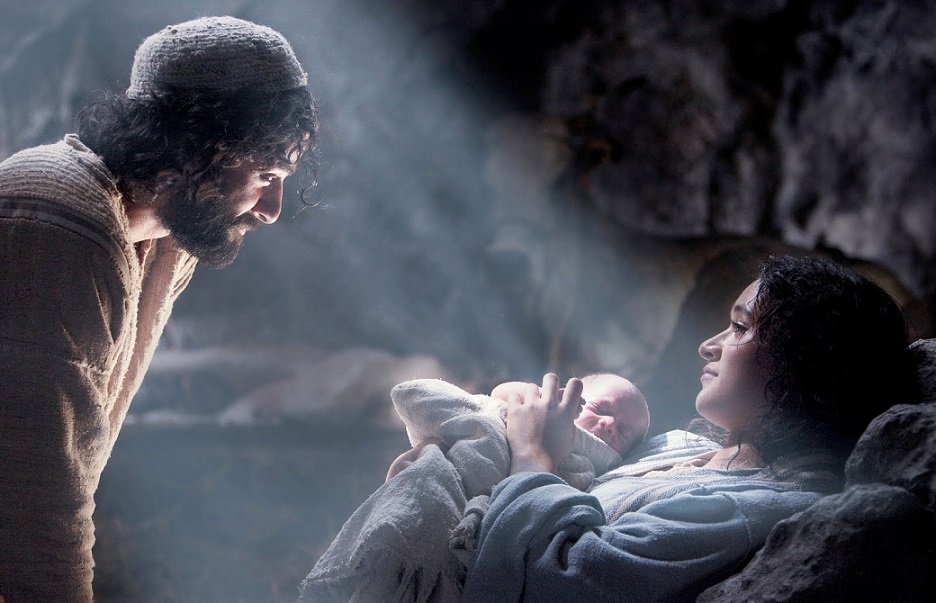
The Lord of peace himself give you peace at all times and in every way! (2 Thessalonians 3:16)
Shalom is tied to the imagery of Psalm 23, where the Lord is our Shepherd. He causes us to “lack nothing” because he is our source, to lie down in green pastures because we are filled, to sleep next to still waters and not thirst, to be anointed with the oil of joy, to sit down and feast in complete safety even in the presence of our enemies, to know that our cup overflows with blessings, to know that goodness and mercy will follow us all the days of our life, and even afterward to dwell in the presence of God forever!” That’s shalom, the birthright of God’s children, the promise of the Messiah!

God was reconciling the world to himself in Christ, not counting people’s sins against them. And he has committed to us the message of reconciliation. (2 Corinthians 5:19)
Yet, despite angelic proclamation, many people don’t experience “peace on earth and good will.” They don’t know the reality of shalom, of eirene, of God’s perfect peace. People live, right at this moment, disinherited from their birthright, dispossessed of the promise, disenfranchised from the blessing, and disaffiliated from God’s shalom. When we look at the state of broken humanity in this broken world, how do we have the audacity to say, “Jesus is Emmanuel, God with us?”

God made him who had no sin to be sin for us, so that in him we might become the righteousness of God. (2 Corinthians 5:21)
But that’s the Gospel, isn’t it? That’s the Good News. At the center of the Christian message is a promise of uplifting the poor, releasing the captives, restoring the outcasts, recovery of vision, and freedom for the oppressed. Yes, it’s a future promise we long to see fulfilled. But it’s not solely a future promise. It is also an imminent promise. We have the deposit of that promise now! “Unto us a child is born, unto us a Son is given!” Jesus is here, with us, in this very moment! That’s what Emmanuel is. Jesus entered the human condition and, taking it all upon himself, exchanged our pain, our sin, and our brokenness for his own perfect peace!
We now begin a series here as we journey together through the Season of Epiphany, exploring the claim that Jesus is “Prince of Peace.” Emmanuel doesn’t just mean that God is with us in our thoughts. Prince of Peace doesn’t imply that Jesus simply makes us feel good. Shalom is far more than merely “peace of mind.” Shalom, eirene, is perfect peace. Jesus is imbedded in our circumstances to bring about redemption, and change, and victory.
However, I give fair warning that each topic in the series deals with a societal ill, a social reality that exists in the world. So, we will inevitably touch on subject matter that has been politicized. Much of the conversation has been coopted by political movements and has thus become partisan and divisive, even in our churches. I am not interested in the secular, worldly, human politics of it. Yet, it’s there. And I am aware that it’s there.
So, how do we as the Church reclaim these topics about which Jesus continually preached and taught, and into which he physically entered? How do we redeem them for the Kingdom of God? What does it mean for Jesus to be with… to be among… to be in the midst… to be present in our lives, in our pain, in our sin, in our brokenness?
We indeed have a story to tell the nations!! Now, Let’s journey this road together.
- Dr. Richard D. Booker
 richardbooker.org